Essay TikTok Ad Creative
UGC vs Founder-Led Video Ads on TikTok
Founder or UGC ads work on TikTok based on product category, not preference.
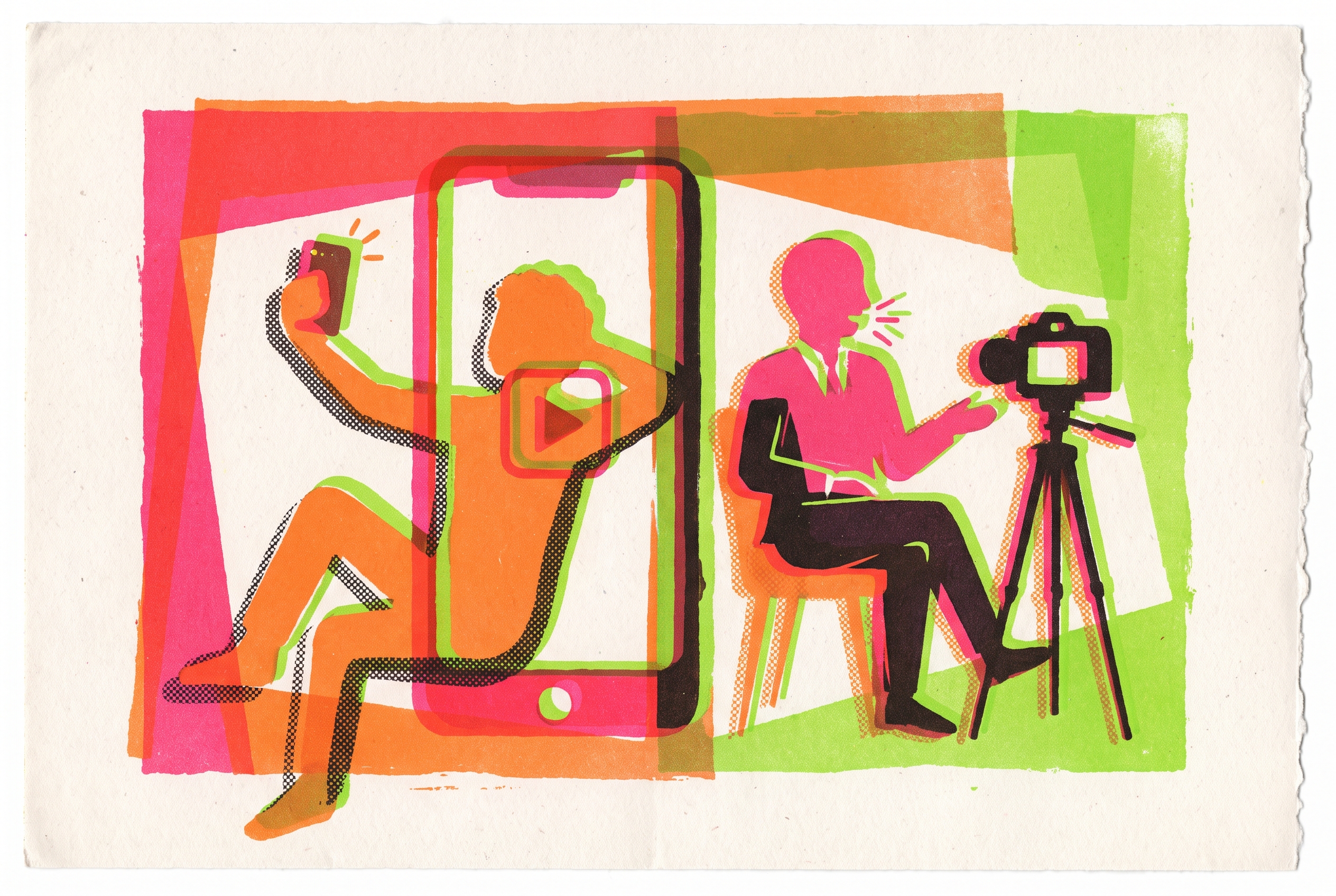
On TikTok, the format that matches how people actually scroll the feed is what makes an ad perform. That makes the choice between UGC and founder-led video a mechanical decision about platform fit, not a philosophical one about brand voice. The For You Page runs on algorithmic discovery, and it's built to surface content that feels native: vertical framing, sound on, hand-held camera work, a creator talking to the camera. TikTok's delivery system reads engagement signals and rewards whatever generates them, and content that fits this mold generates them more reliably than content that doesn't. A polished commercial that performs well on Meta will underperform on TikTok, because it reads as an interruption in the feed rather than part of it, triggering immediate ad blindness and scroll-away behavior among viewers who've been trained to skip anything that looks like a studio production. UGC and founder-led ads can both feel native or feel foreign depending entirely on how they're shot and cut, so the real question is which format's structural characteristics line up with TikTok's specific content grammar. TikTok's own creative benchmarks back this up directly: Spark Ads using creator content show a 43% lift in conversion rate over standard in-feed ads, and non-Spark creator assets show a 5 to 9.7% lift. Both formats share one non-negotiable production discipline on this platform: the hook has to land within the first three seconds, or the viewer is gone.
UGC ads on TikTok and why the feed rewards them
UGC-style ads outperform traditional brand creative on TikTok because their structural traits match the patterns TikTok users are conditioned to engage with, not skip. The footage looks shot on a smartphone, vertical, using native fonts and trending audio, visually indistinguishable from an organic post a friend might send. The pacing is aggressive, built around rapid jump cuts that keep retention from dropping. The entire structure is hook-first: the first one to three seconds carry the full weight of keeping someone watching. And the creator speaks directly to the viewer as a person, not as a crowd being pitched to.
The term "UGC" actually covers two different things, and conflating them is a common strategic error. Authentic customer UGC is raw, unscripted content from real buyers, usually collected through contests or post-purchase requests, and it carries a trust signal because the viewer knows no one is being paid to say it. Scripted creator UGC, on the other hand, is produced by paid creators working from a brief. It gives a brand the volume it needs, but it fatigues faster as the format becomes recognizable over time. The "ring-light testimonial" style that dominated earlier years has become a pattern performance audiences now scroll past on sight. The strongest creative programs don't pick one over the other. They run scripted creator content to test fast and layer in authentic customer content for the trust-signal depth scripted work can't match on its own.
UGC's structural advantage on TikTok comes down to cost. It's cheap to produce in volume, and that volume feeds the algorithmic learning loop directly: more creative variants mean faster data, lower CPAs over time, and a shorter gap between a hypothesis and a validated winner. But the format has a ceiling, and it's category-dependent. In fashion, beauty, cosmetics, and home goods, where visual results and social proof are the primary purchase driver, UGC matches or outperforms founder content on ROAS. The mechanism works best when a product's value is visible and relatable on sight, not when it depends on technical understanding or specialized expertise to evaluate.
How execution shapes founder-led ads on TikTok
Founder-led ads work through authority and accountability, a different psychological mechanism from UGC's peer validation. A founder on camera signals that a real person is staking their reputation on the claim being made, which carries particular weight for products facing high skepticism. But on TikTok, this mechanism only converts if the execution is right. If founder content adopts TikTok's native grammar, it performs; if it imports a Meta or YouTube style, it doesn't.
By category, founder-led ads show a clear structural advantage in skincare, supplements, health and wellness, and technical products, where skepticism runs high and purchase requires understanding a claim. At the top of the funnel, a founder explaining the product's origin and differentiation justifies a price point and separates the brand from cheaper alternatives in a way generic creative can't. Further down funnel, founder-driven landing page traffic tends to convert at a higher rate even when click-through is lower, because the format pre-frames credibility before you ever land on the page.
The execution requirement is the whole ballgame here. A founder talking directly into the camera in the polished, scripted style that works fine on Meta will underperform on TikTok, because this platform's audience prioritizes entertainment and native feel over formal credibility cues. Founder formats that adapt, shooting POV while using the product, working in trending audio, cutting with TikTok's editing conventions, showing behind-the-scenes or day-in-the-life footage, perform on par with well-produced UGC. When a founder ad appears to fail on TikTok, the format itself usually isn't the problem. The execution failed to meet the platform's content grammar. Founder content does carry one durable production advantage: lower cost per video and a longer lifespan before fatigue sets in, meaning founder ads tend to hold performance longer than UGC before needing a refresh. The tradeoff is volume. A founder can only shoot so many videos in a month, which caps testing velocity no matter how well the format performs.
Creative fatigue on TikTok runs faster than most brands plan for
Creative fatigue hits faster on TikTok than on any other major paid social platform, so a format that's winning today can lose its edge quickly if the supply chain behind it can't keep pace with how fast the platform burns through creative. UGC's fatigue profile is short on an individual-asset basis: any given video wears out quickly, and refreshes need to happen often. Because UGC is cheap and fast to produce, a brand can run many variants at once, slowing overall fatigue through variety.
Founder content runs the opposite profile. Individual videos last longer before they wear out, but volume is constrained by how much time a founder actually has. When a founder ad does fatigue, there's often no quick replacement sitting in the pipeline unless the brand planned for format diversity ahead of time. Hybrid formats, blending founder framing with UGC testimonials or customer social proof, extend creative lifespan beyond what either format manages alone. Blending the two approaches is a structural argument against treating the choice as either-or.
Conditions that favor UGC, founder-led, or both
The choice between UGC and founder-led creative on TikTok is a function of product category, funnel stage, purchase complexity, and how much creative a brand can realistically produce, and the conditions favoring each are identifiable well before a dollar gets spent. UGC fits fashion, apparel, beauty, cosmetics, and home goods, where visual results and social proof are the primary purchase driver and the product's value is obvious on sight. It also fits the middle and lower funnel: retargeting audiences who've already seen brand or founder content, abandoned-cart segments, and lookalike audiences built from proven buyers. UGC works best when a brand can build a structured content collection system, whether through a creator network or a customer submission pipeline, because you need a real supply chain, not occasional one-off shoots, to sustain the volume TikTok's fatigue rate demands.
Founder-led content fits skincare, supplements, health and wellness, and tech products, where skepticism runs high or a purchase decision depends on understanding ingredients or features before committing. It fits the top of the funnel, introducing a brand to cold audiences who have no prior exposure and need a reason to trust before they'll click anything. It fits higher price points and new product categories, where a peer testimonial alone won't close the trust gap on its own. And it fits B2B products aimed at founders and operators, where talking-head and day-in-the-life formats carry an authority signal that anonymous UGC can't deliver.
Some situations call for both at once. Growth-stage DTC brands in competitive categories tend to do best with a 50/50 format split, with both sides adapted to TikTok's native execution norms, so they cover funnel depth and creative volume at the same time. Brands with moderate creative budgets that can't sustain high UGC volume on their own can use founder content to fill the gaps, extending overall creative lifespan without demanding a constant production cycle they can't afford.
Scripted creator UGC, on the other hand, is produced by paid creators working from a brief.
AI creative tools and the production economics of both formats
AI-assisted creative production is compressing the feedback loop between a hypothesis and a validated winner, for UGC and founder formats alike. That changes the economics of creative velocity, but it doesn't change the underlying platform logic that determines which format fits which condition. TikTok's Symphony suite, released June 22, 2026, bundles Symphony Creative Studio (which includes Symphony Agent), Symphony Automation, and a Symphony API into one workflow. A brand gives the Agent a campaign goal through chat, and it handles brief creation, creator sourcing, video generation, and translation across TikTok's ecosystem from there. Smart+ Creative Selection centralizes creator content, product assets, and Symphony-generated creative in a single place and automatically shifts spend toward whatever variants are performing best, closing the loop between production and optimization.
The real shift is volume. Brands using AI-assisted script generation and automated variant production are publishing far more creative variants than teams on traditional production workflows because AI compresses how fast a brand can move from idea to test. That creates a complication: AI compresses production speed, but disclosure rules can undercut the trust signal the content is built to carry. TikTok labels and watermarks AI-generated ads made through its own Symphony tools automatically, but ads built with third-party AI tools need advertiser-side disclosure. That creates a visible disclosure layer, and it means AI-generated content built to mimic UGC's trust signal can be structurally undermined by the platform's own transparency rules the moment a viewer sees the label. American Eagle saw a 60% higher traffic ROAS using TikTok Symphony's Showcase Products feature compared to standard campaign assets, so the infrastructure shift can translate into measurable gains when it's applied to the right format.
Tracking competitor creative on TikTok before committing to a format
Checking what competitors are actually running on TikTok, and what's gaining traction in the category, is a faster and cheaper way to validate format assumptions than running every test in-house from scratch. Free, platform-native tools show what's currently live but not what's actually being spent on, which formats are being scaled versus quietly tested, or how messaging has shifted over time. Surfacing that requires paid tools or a systematic tracking habit.
Tools built specifically for TikTok creative discovery fill that gap. Pipiads, starting at $49 a month, and BigSpy, starting at $99 a month for TikTok access, both specialize in surfacing TikTok-format creative, useful for spotting whether competitors in a category are leaning UGC or founder-led and which hooks they're actually testing. Adside's competitor ad tracking is built for a related version of this same research problem: tracking rival campaigns, creative patterns, messaging angles, hooks, and channel activity across Meta, Google, and LinkedIn, inside the same interface used to plan and run campaigns. That keeps the loop between what competitors are doing and what a brand actually deploys closed, rather than scattered across a handful of disconnected tools.
Running UGC and founder-led formats together across TikTok and other channels without fragmenting the operation
The UGC-versus-founder decision can't really be made for TikTok in isolation, because most brands running TikTok are running Meta, LinkedIn, or Reddit at the same time, and each platform has its own native logic. Treating those as separate operations kills the creative velocity that makes either format worth running. On YouTube, longer founder-led educational formats carry more weight because the platform's intent context rewards expertise over entertainment. On LinkedIn and Reddit, B2B brands need founder-led authority content and community-native posts respectively, formats that diverge sharply from TikTok's UGC logic and can't be ported over without a rebuild.
TikTok's cost structure, relative to comparable reach on Meta, gives it a real efficiency edge for discovery and top-of-funnel volume, which makes it a logical lead channel for UGC testing before validating winners on other platforms. If you want to know which format fits TikTok's native content grammar, you need to test both UGC and founder approaches at scale, and end-to-end ad platforms like Adside, built around multi-channel creative testing and fast performance feedback, let brands move past guesswork and iterate on actual platform data. Most brands still manage TikTok creative, Meta campaigns, competitor research, and performance reporting through separate tools, and that fragments the feedback loop and slows down the iteration both formats depend on to stay competitive. Effective UGC strategy depends on testing many variants to feed the algorithmic learning loop, so you often benefit from running parallel tests across platforms to validate winners faster. An integrated platform can surface which UGC patterns work on TikTok and apply those insights to Google, Meta, LinkedIn, Reddit, and Twitter without rebuilding the testing workflow from scratch for each one. Adside takes this on by combining competitor ad tracking, creative analytics, AI-generated copy and creative variants, and automated ad operations for those five networks in one platform, which removes the stack of spy tools, analytics dashboards, and bulk-import apps that otherwise fragment a multi-channel creative operation, and keeps the intelligence from TikTok testing in the same place where campaigns on other channels get built.
Handing creative strategy and execution to a managed service versus running it in-house
For startups and growth-stage brands, the creative velocity, format discipline, and cross-channel coordination that TikTok advertising demands often exceed what an in-house team can sustain, making handing off execution a strategic choice. TikTok's fast fatigue cycle, combined with the need to test UGC and founder formats simultaneously while you adapt execution to platform-specific norms, demands dedicated creative operations, and most pre-Series B and early Series A brands can't staff that internally without pulling founders away from product and business development.
Adside's fully managed service handles strategy, creative production, launch, and reporting end to end, within the same platform used for self-serve. Founder-led ads on TikTok require a different production discipline than other platforms. Creative teams need performance feedback in near real time to know whether an execution is landing or falling flat, and systems that consolidate TikTok data alongside results from other ad networks make it far easier to spot an underperforming founder format and pivot before the budget's wasted. Because the managed and self-serve versions sit on the same platform, a brand that starts with Adside managing the account can shift to running it in-house later without switching tools or losing the institutional knowledge about what's actually worked. Other agencies offer comparable managed execution for brands that want outside specialists running the account day to day. Check who actually runs the account once the contract is signed, and how senior that person is, since the expertise that wins the pitch meeting isn't always the expertise managing the campaign afterward. Whichever path a brand takes, the platform and the underlying data should stay in the brand's own control regardless of who's doing the day-to-day execution.