Essay TikTok Ad Creative
TikTok Ad Creative Breakdown for Direct-to-Consumer Brands
Smart targeting barely matters on TikTok—creative production and watch time do.
TikTok decides who sees an ad by watching how people watch it, not by how carefully a brand has sliced up its audience. That one fact changes what a DTC brand should spend its time on. On Meta, audience architecture still carries real weight: lookalikes, interest stacks, custom lists all shape who an ad reaches. TikTok's system, including its Smart+ autonomous campaigns, works differently. Feeding it broad geography, a budget, and a KPI leads it to pick the best-performing creative variation for each person from whatever asset library the advertiser has supplied. Targeting precision barely enters the equation.
So the old skill set of building tight audience segments mostly doesn't transfer. The skill that matters now is creative production and creative testing, full stop on where the effort goes. A brand with weak creative and tightly built targeting will lose to a brand with strong creative and broad targeting almost every time, because the algorithm is optimizing around engagement signals the creative itself produces.
The For You Page is why this works the way it does. Every video in that feed, paid or organic, is competing for the same seconds of attention. Users scroll through this feed for hours, so they've built sharp instincts for spotting content that doesn't belong, and ads dressed up like ads get skipped on reflex.
One more framing point matters before getting into tactics. TikTok isn't a direct swap for Meta. It functions as a demand-creation surface, introducing products and building intent, rather than a demand-capture channel that closes people who are already looking to buy. The better frame is assisted conversion contribution measured over a 14-day window, which captures the influence TikTok has on purchases that eventually close somewhere else.
The watch-time thresholds that separate scrollers from buyers
If creative is the lever, watch time is the gauge that tells a brand whether the lever is working. If you watch past six seconds, you convert at meaningfully higher rates than those who don't. That single threshold turns the opening of an ad from a stylistic choice into a financial one, with consequences that ripple through every later stage of the funnel, including the demonstration, the social proof, and the close.
TikTok's engaged-view attribution model gives this threshold teeth. The six-second mark is the line between a scroller and someone the algorithm now considers worth showing more of this ad to.
What the first three seconds have to do
The opening three seconds of a TikTok ad carry more commercial weight than almost any other three seconds in digital advertising, because they decide whether anything after them gets seen. Lose the viewer there, and the demonstration, the testimonial, the call to action, none of it matters. Nobody watches long enough to reach it.
High-performing hooks tend to do one of a few things, and each works through a different mechanical trick. The first states the product's problem-solution fit immediately, in first-person language: "I never found a concealer that lasted all day until this one." The second shows the product in use before a word is spoken, letting the visual itself generate curiosity, which works especially well for products with a visible before-and-after. The third leads with a bold outcome claim that makes the viewer need to know how: "I generated more revenue in one month than I did in my entire previous quarter." That line creates a pattern interrupt with no production value.
Specific hook formats back this up. POV framing ("POV: You finally found a product that actually works") puts the viewer inside a relatable moment. Direct challenges to an assumption ("This is why your skincare routine isn't working") work because they question something the viewer already believes, which is harder to ignore than a plain product pitch.
What kills a hook fast: logo intros, slow brand build-ups, stock footage, anything that signals "commercial" before the viewer has a reason to care. Keep branding out of the first beat, let the product or the claim do the work, and save the logo for later in the video, if it needs to appear. TikTok users clock these signals almost instantly and move on.
Why native-feeling UGC consistently outperforms polished brand creative
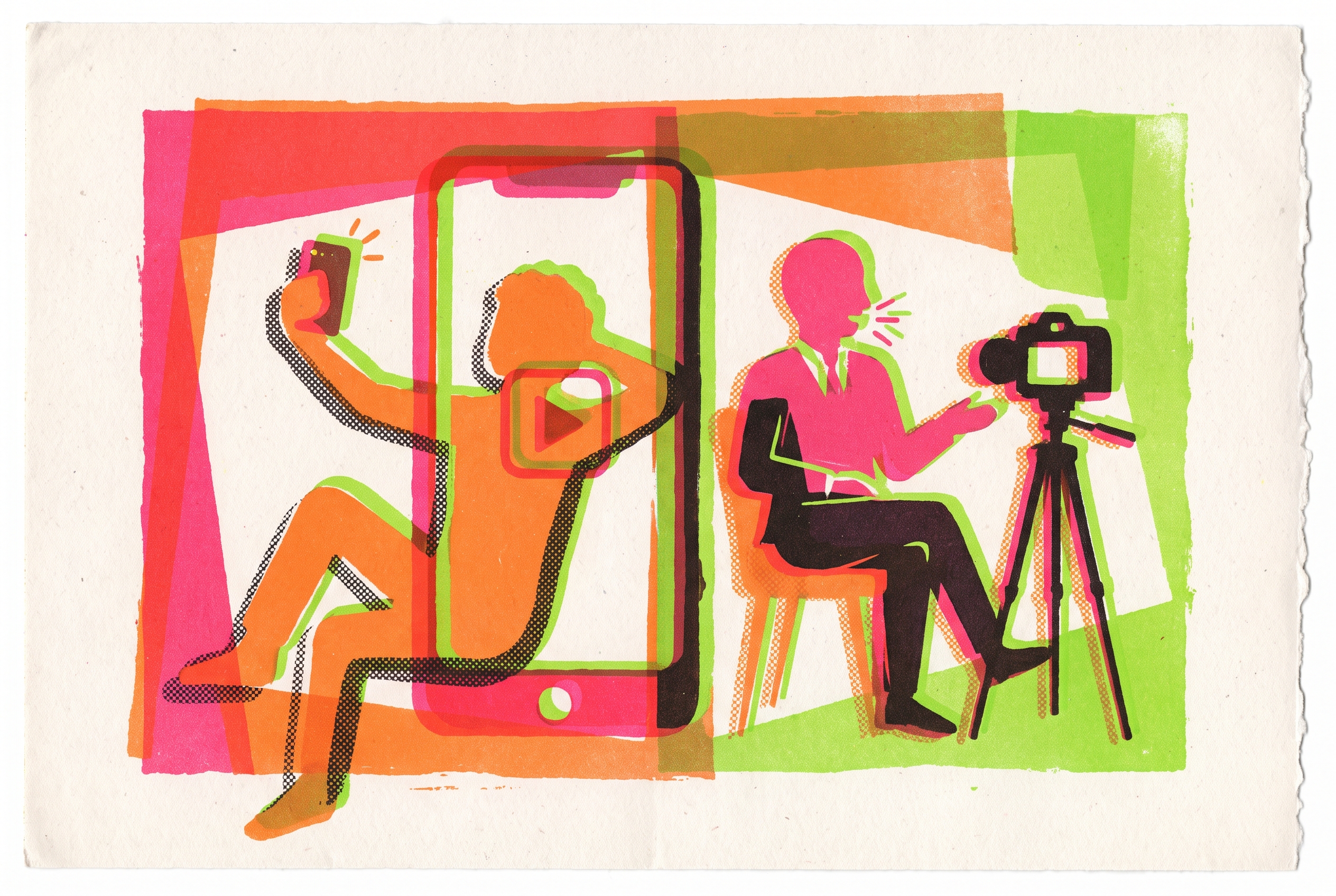
Lower-production, creator-style content beats polished brand ads on TikTok, but that has nothing to do with quality being optional. It's about trust. Unpolished doesn't mean careless. It means the production choices read as a real person sharing something, not a brand selling something.
A few specific signals separate native-feeling video from brand video: vertical 9:16 footage shot on a phone, real people in an uncontrolled setting, natural light, quick cuts and on-screen text in the same style as organic posts, and a conversational tone. None of that is an excuse to cut corners on the actual craft of the video. It's a set of deliberate choices that make the ad look like it belongs on the platform.
Spark Ads put this principle to work at the format level. TikTok built its ad system to reward that kind of authenticity structurally, not as a side benefit.
Wyze shows what this looks like in practice. The result is a closed loop that keeps producing authentic-feeling creative at scale, and Wyze doesn't need its own production budget to generate it.
Sound, pacing, and trends as conversion signals
TikTok runs sound-on by default, so an ad without a real audio strategy feels unfinished the moment it starts playing. Treating sound as something to bolt on after the visuals are locked is the same as cutting out a piece of the ad that's supposed to be converting viewers.
A practical hierarchy works for most DTC ads. Voiceover narration carries the story and keeps the viewer oriented, moving through a hook, a problem, and a solution. Captions run as a parallel track for accessibility and for the share of viewers watching muted, but captions alone can't replace a real audio strategy.
Trending sounds and meme formats matter for a reason that goes beyond just fitting in culturally. The algorithm reads trend participation as a signal of engagement likelihood, so an ad built around a current sound or format tends to get more favorable distribution than one that ignores platform culture. The risk sits in forcing the fit. Trends need to be chosen for fit, not grabbed because they're trending.
Pacing ties all of this together. Quick cuts timed to the audio keep a viewer inside that critical six-second window. A slow build that would work fine on YouTube or Instagram loses the TikTok viewer before the problem and solution ever get established.
Every video in that feed, paid or organic, is competing for the same seconds of attention.
TikTok Shop ad formats and in-app checkout's effect on the creative brief
TikTok Shop's in-app checkout means a viewer no longer has to leave the platform for a landing page. Because the purchase happens inside the app, TikTok's algorithm gets a clean, closed-loop signal of what converted, and delivery efficiency improves over time compared to campaigns depending on a browser pixel firing on an external site. That shift changes what a creative brief needs to accomplish: the destination is the product card, not a landing page, and the creative has to be built to carry a viewer that last short distance.
Two formats do most of the work for DTC brands in 2026. They support manual uploads as well as the Spark Ads model, and they're the primary format for scaling creative that's already proven itself to cold audiences, the format most DTC brands start with. The typical sequence has brands running Video Shopping Ads first, then layering in LIVE Shopping Ads once that foundation exists.
Shop hooks carry a heavier job than awareness-focused hooks, because the viewer has to stop scrolling and build enough product intent to tap the card, all in the same clip. The demonstration, the social proof, and the close all need to pull toward that tap, not toward a click-off to somewhere else. Rare Beauty's approach illustrates the model: organic content builds reach, paid formats including Shop Ads and Interactive Add-Ons drive the specific actions that matter, and TikTok Shop is treated as another convenient revenue stream.
AI creative tools, TikTok's native stack, and third-party platforms in the production equation
Keeping pace with TikTok's testing demands used to mean you needed a large production budget or a lot of creator relationships. AI tools are narrowing that gap. TikTok's own Symphony suite includes Dreamina Seedance 2.0, ByteDance's AI video model, which produces consistent video without the manual touch-ups earlier AI tools required. A feature called Reference to Video lets advertisers point to exact images or products they want to appear at specific moments in a generated video, so brands get real control over product placement inside AI-made creative. Auto Selection, part of Smart+, pulls together everything in a brand's creative library, creator content, product assets, Symphony-generated video, and automatically picks what's likely to perform best, taking the manual rotation decision off the media buyer's desk.
The results are measurable. American Eagle used Symphony's Showcase Products feature and saw traffic ROAS come in 60% higher than business-as-usual efforts, a sign that Symphony's integration with TikTok's own delivery system produces real commercial lift, not just production convenience. Aporia LTD used TikTok's Avatar API and saw a substantial increase in creative output alongside gains in both click-through rate and ROAS, evidence that AI-generated creative at scale outperformed the brand's prior approach on the metrics that actually count.
Third-party tools fill in the gap for brands that don't want to hire creators or book studio time for every test. Tools like Creatify take a product URL and a script and turn them into a short-form video ad built around a realistic AI avatar. That directly solves the production bottleneck that otherwise keeps brands from matching the pace of iteration TikTok's fatigue cycle demands.
Creative fatigue is the dominant operational constraint, and velocity is the only answer
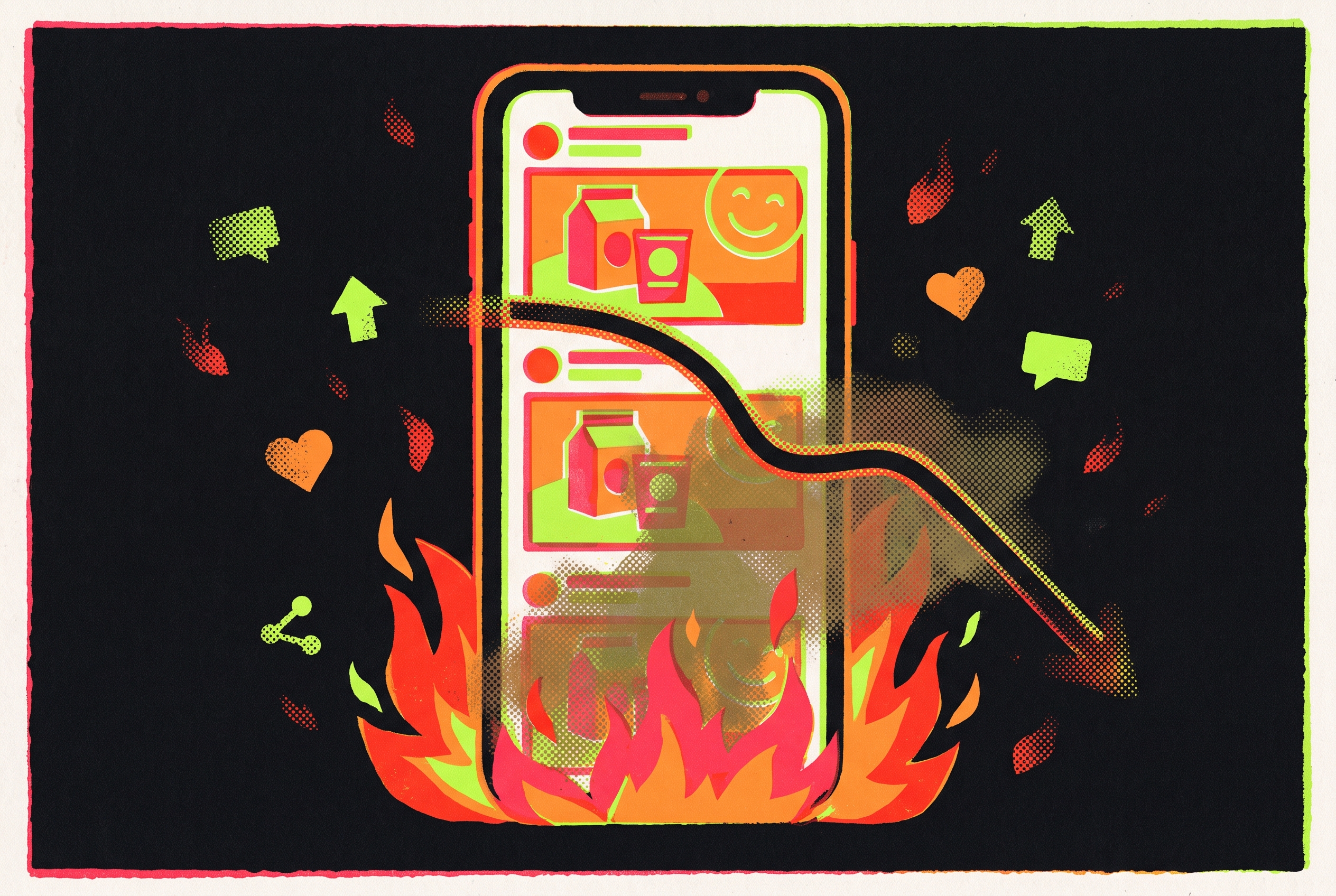
High-performing TikTok ads wear out faster than equally strong Meta creative. That single fact turns creative production and rotation into the core operational job for any DTC brand spending real money on TikTok, not a task that sits off to the side of media buying.
TikTok's algorithm rewards brands that keep feeding it something new to test. Its ability to find fresh winners depends entirely on the advertiser supplying a steady stream of variations. Performance drops steadily when a brand launches a set of ads and leaves them running untouched, while running creative as a rotation system keeps the brand ahead.
The operational standard that separates brands managing this well from brands getting hit by cliff drops: run three to five creatives per ad group, and refresh them before performance visibly declines, not after. You need to vary a handful of elements on purpose inside each testing cycle. And adjusting CTA phrasing and placement changes downstream click and purchase behavior in ways that are easy to test and cheap to iterate on.
Targeting should stay broad as the default starting condition for new tests, not something to fall back on. TikTok's algorithm finds high-intent users through behavior, and narrowing the targeting too early limits how much it can learn about which audiences respond to which creative.
Building a testing system that keeps finding winners before fatigue ends them
TikTok creative follows a maturity curve: a learning phase in weeks one and two, peak performance in weeks five through eight, and fatigue setting in from week nine onward. So you need to build a working testing system around that curve, bringing new variations into rotation before the current winners peak, not after they've already started sliding.
Four things need to be in place to run this continuously at DTC scale. A rotation protocol that retires creative ahead of a visible decline rather than reacting to one, tracking hook rate, six-second hold rate, and completion rate as leading indicators instead of waiting on CPA, which only tells the story after the fact. TikTok's Creative Center gives native access to this kind of signal, and tools like PipiAds, at $49 a month with a database of over 50 million TikTok ads, add deeper competitive detail on top of it.
Smart+ campaigns speed all of this up by automating the selection step. Instead of a media buyer manually rotating ad groups, you supply a rich asset library and the algorithm picks the best variation for each viewer in real time. The job shifts from managing rotation by hand to keeping that asset library stocked.
Measuring TikTok creative performance without letting attribution gaps mislead budget decisions
Most DTC brands still measuring TikTok on last-click ROAS are working from a signal that's incomplete by design. Engaged-view attribution catches conversions last-click models never see, and TikTok's role as a demand-creation surface means its real effect often shows up as a lift in Meta-attributed sales, visible mainly when TikTok spend gets pulled and that lift disappears.
To correct for this, you need to run server-side tracking into the TikTok Events API, whether through server-side GTM, TikTok's Events API Gateway, or a direct API integration. Brands relying only on TikTok's self-reported conversions, without server-side verification, end up over-allocating budget to the channel by a margin that's measurable once the gap is closed.
A clear order of metrics keeps this honest. Six-second hold rate, with 10% or higher as a working benchmark, comes first, since it's the signal the algorithm uses to decide distribution. ROAS comes last: it's a lagging number you use for budget calls once the creative signal underneath it is clean.
TikTok Shop adds a structural advantage here. Brands running TikTok Shop ads get materially better attribution fidelity than brands sending traffic out to an external landing page, so the product card, not the website, is where the modern TikTok creative brief needs to start.